
It has been a long time since my previous post, but I am ready to continue this blog series. I have been traveling in several European countries over the past couple of months and my writing and research agenda were temporarily diverted. And while this could have been a travel blog, it turns out that I’m more of a retrospective writer than an “in the moment” one. In the meantime, I have found another associated research domain that I may want to talk about later – computational economics using agent based models.
This post contains some of the revelations from an ongoing research and discussion group led by Michael Levin, professor of biology at Tufts University. While this post continues directly from the previous two posts regarding evolutionary systems, it takes a pronounced shift away from abstract mathematical experimentation and toward the messy reality of biology. It is all well and good to describe “discoveries lurking in vast spaces of total garbage” and “pockets of computational reducibility“, but those are just bits of scaffolding for a newly emerging view of the world. Micheal Levin introduces some meat to this emerging view by demonstrating a slew of biological phenomena which cannot be explained except by reshaping our understanding of life and intelligence.
My goal in sharing about Michael Levin’s research is not to subscribe you to his perspective, but to highlight frameworks and features of living things that can be used to model seemingly unrelated phenomena, such as language. In fact, language is not generally considered to be “living” in a way that’s separate from the human being, but it is certainly not abiotic. By dissolving the usual categorical boundaries between living things we can begin to describe how they are living and what that means.
Michael Levin uses a simple analogy of electromagnetism to introduce what he intends to do through his research and academic platform. For most of human history, we have been exposed to the spectrum of visible light (from red to violet) without being able to describe it in terms of its physical nature. Even though many of its properties are still elusive, we now know it belongs to a much broader category: electromagnetic radiation. Once we were able to unify the visible spectrum with a greater descriptive theory, we gained access to an invisible reality of which visible light is actually only a small percentage.
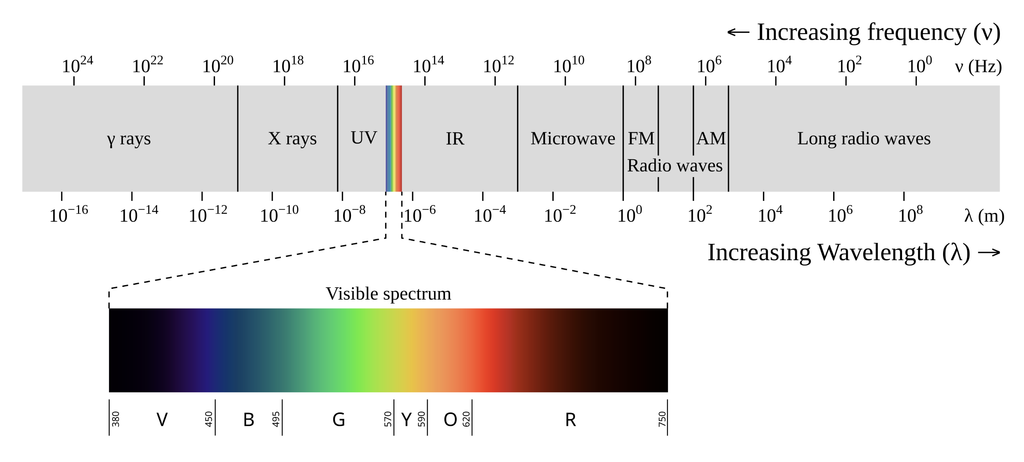
Michael Levin proposes that people open up to the possibility that intelligent life can exist on a similar spectrum. If we stop taking such an anthropocentric view, we no longer need to relate personally to these other forms of life in order to take them as fully fledged. Whether they are microscopic, macroscopic, or megascopic; whether they are biological, technological, or mathematical; whether they have lifespans of a few seconds, a few years, or an eon – the patterns that comprise intelligent life should be inconsiderate of domain or scale. These patterns can have varying levels of complexity, and they can also be centralized or distributed.
One of Michael Levin’s most mind-bending biological experiments that forces a reframe of an anthropocentric view ironically does so using human cells. We are all familiar with the fact that the biological foundation of a human being is our genes. In theory, a creature with the same genetic code as a human should be a human. And yet, by taking cells from the surface of a human trachea (regardless of whether the human is living or not) and isolating them in a suitable petri environment, they begin to exhibit behaviors that can hardly be explained by traditional evolutionary biology. There is no environment in which the cells of a human tracheal epithelium would ever exist on their own, so they certainly had no “natural habitat” to evolve in. And yet, when separated from the context of the human body, they self assemble into a small multicellular organism (called “anthrobots” by Levin), move around, interact with the environment and their neighbors, and even express about half of the human genome completely differently from how it would be expressed inside the body. There’s no precedent biological theory that can be used to derive this creature’s behavior, or even explain how a whole non-human organism is written into the human genome.
To drive the point home, a particular specialized human cell is usually interpreted as having a narrow, pre-coded function in the human body, but it actually uses a relatively advanced intelligent capacity to keep itself aligned with its environment, communicate with its neighbors, and meet its individual goals from moment to moment. It has a much more expansive capacity to explore solutions to environmental problems than it’s usually given credit for — especially when there is no more human body and it pursues life for itself! According to Michael Levin:
“It’s not just that this [intelligence] goes down to the cell level. No, it goes far beyond that, because even the chemical material inside that cell — not the cell itself, not the nucleus, not any of that — but just the chemical pathways, for example gene regulatory networks or other chemical pathways, just from the way the math works, they are themselves capable of at least 6 different kinds of learning — including Pavlovian conditioning.”
If we tap into this intelligence directly through the communication mechanism of cells, we can cause very strange things to occur. Michael Levin has performed experiments with tadpoles that show a higher order of thinking in multicellular setups. In one experiment, using electrical and chemical signals on developing tadpoles to stimulate various regions of the body, he caused the cells there to “believe” they should become an eye. This eye develops, perceives light, and connects to the nervous system via an optical nerve despite being, say, on a leg or a back. The tadpole responds to the eye’s sensory input as if it were a normal, fully functioning eye. We don’t know how to make a tadpole eye, but the tadpole’s cells do, and if we tell them to, they will! For another experiment, by inserting a human oncogene (cancer causing gene) into the body of a tadpole, it will develop a tumor. As far as the tadpole’s normal cells are concerned, the tumor is essentially no longer a part of its body (i.e. it doesn’t communicate normally with the rest of the body). However, by forcing the tumor cells to start communicating with the surrounding cells, it becomes re-integrated into the body. The oncogenes are still there, but as long as the cells can communicate and listen to their surrounding cells, treating them like they are part of the same organism, there is no tumor.
This is a mere fraction of the research Michael Levin explores and shares on his YouTube channel and in his publications, but it at least introduces his premise and guiding principles. Aside from biology itself, he has talked about simple computer programs having functions that go completely unnoticed (specifically sorting algorithms), and purely abstract interpretations of intelligence as well (hierarchies, information transfer, etc.). What his research goes to show, though, is that natural systems tend to have a sort of “completeness” on the level of individual components as well as the wholes of which they are a part. Such a component is called a “holon”, a part which is whole in itself yet also part of a greater whole. By exploring the natural world (or even the unnatural world) as if it were made of holons instead of mechanistic components, a fuller picture arises and more accurate models can be created.
So, in order to face evolutionary spaces (as laid out in the previous two posts with Ken Stanley and Stephen Wolfram) — which are vast, mostly empty, high-dimensional, and wholly unpredictable — we don’t just use evolutionary exploration methods, we also build holonic systems. If we consider things through this lense, we have a way to conceive of language as a living thing, extricable from the human, but just like the “anthrobots”, not fundamentally human in its expression once it is removed.
Having explained some of the inspiration and grounding I’m taking from these three researchers, I can finally begin to lay out a full premise for how language might be modeled. Here are the basic notions:
- It should reside in an evolutionary space. That is, a mostly empty space of high dimensionality and high deceptivity.
- It should explore that space using evolutionary mechanisms, such as mutation and reproduction.
- It should find pockets of computational reducibility and use them in its structure.
- It should be holonic in nature. That is, it and its individual components should have competency in their own right.
There are several aspects of language which already reflect these notions. For example, language clearly resides in a highly dimensional space; we can communicate on so many different axes of meaning. Not only are there simple spectra like “hot and cold”, “high and low”, or “fast and slow”, there are abstract spectra such as “dog-likeness” or “irreproducibility”. It’s not hard to come up with an plethora of examples. There’s also language development in children, which has some fun examples of how a language can behave holonically – such a overgeneralization, where child learns a morpheme (such as “-ful” or “-ly”) and it begins to appear “muchfully” in their speech until the system corrects.
In any case, these premises are intended to open up the possibilities for how language could be modeled. I will write a much more in-depth blog post on the kinds of things I have considered in that vein in a future blog post.